Spring in Virginia brings warmer temperatures—but it also ushers in some of the year’s most unpredictable weather. Heavy rain, high winds, hail, and sudden temperature swings can all take a toll on your home, especially the roof system that protects everything underneath it. Preparing before storm season—and knowing what to look for after—can make a significant difference in preventing damage that isn’t always obvious right away.
Spring storms don’t just test shingles. They emphasize the importance of gutters, flashing, attic ventilation, and the entire roofing system working in harmony. Understanding where problems tend to start helps homeowners take action before minor issues escalate into expensive repairs.
Why Spring Weather Is Hard on Roof Systems
Unlike winter snow or summer heat, spring storms often combine wind, rain, and debris within a short period. Strong gusts can loosen shingles or flashing, while heavy rain tests the roof’s ability to shed water quickly. At the same time, clogged gutters or poor drainage can force water where it doesn’t belong.
Rapid temperature changes also matter. Cool nights followed by warm days cause roofing materials to expand and contract, stressing seals and fasteners. Over time, that movement can open pathways for moisture—especially if the roof is already aging or worn.
Common Roof Issues After Spring Storms
Some storm-related roof problems are easy to spot. Others develop quietly over weeks or months. Homeowners should watch for:
- Missing, lifted, or curled shingles after high winds
- Granules collecting in gutters or near downspouts
- Bent or detached flashing around chimneys, vents, or valleys
- Water stains on ceilings or attic decking following heavy rain
Even when damage isn’t dramatic, small vulnerabilities can allow moisture to enter the attic, causing long-term issues before visible leaks appear.
Gutters: The First Line of Defense During Heavy Rain
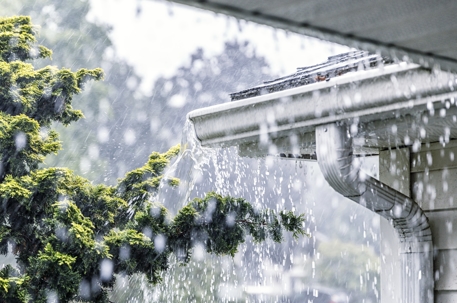
During spring storms, your gutters handle a sudden surge of water. If they’re clogged with leaves, sticks, or leftover winter debris, water can back up under the roof edge or spill down exterior walls.
Overflowing gutters don’t just affect drainage—they can contribute to fascia rot, foundation problems, and moisture intrusion at the eaves. Ensuring gutters are clear, securely fastened, and properly sloped helps move water away from the roof and home efficiently during severe weather.
Attic Ventilation and Moisture Control in Storm Season
Spring storms often bring increased humidity along with rainfall. When warm, moist air becomes trapped in the attic, it can condense on cooler surfaces, such as the roof decking and nails. Poor ventilation makes this problem worse.
Make sure your attic and roof ventilation is clear and balanced, as proper intake and exhaust airflow helps regulate temperature and moisture, reducing the risk of condensation, mold growth, and insulation damage. Storm season often exposes hidden ventilation problems long before any exterior roof damage is noticeable, so checking your system now can prevent costly repairs later.
When Storm Damage Isn’t Immediately Visible
Not all storm-related issues show up right away. Wind-driven rain can bypass shingles and enter through compromised flashing. Small leaks may only appear after repeated storms, while moisture in the attic can go unnoticed until insulation becomes saturated or odors develop.
Because these issues build gradually, spring is a critical time to be proactive. Catching minor storm damage early helps avoid structural deterioration, interior repairs, and energy efficiency problems later in the year.
Preparing Your Home for Spring Storms
Before storm season peaks, homeowners can take practical steps to reduce risk:
- Clear gutters and downspouts of debris
- Trim branches that hang over or rub against the roof
- Check attic spaces for signs of moisture or poor airflow
- Look for loose or damaged roofing materials from the ground
These steps help your roof system perform as intended when storms arrive. However, even the most careful homeowners can miss hidden issues, such as compromised flashing, weak decking, or imbalanced attic and roof ventilation. A professional roof inspection from Holloway Roofing ensures that these unseen vulnerabilities are addressed before storms hit, protecting your home from water damage, mold, and costly repairs.
Early Roof Inspections Will Save You
Storms in early March can still affect your roof, gutters, and attic ventilation—even before spring officially starts. Damage isn’t always visible, but hidden problems can slowly compromise your home’s protection. It’s perfectly fine, and actually wise, to schedule an inspection now.
Holloway Roofing is known for careful inspections, honest recommendations, and dependable workmanship built on years of experience. If you want to be confident your roof system is ready for the rest of the year, our team makes it easy. Schedule an inspection online or call (540) 924-1553 to protect your home and move into the season with peace of mind.